Friday, August 12, 2005

SHF 11 - Capuccino Cheese Jelly Mooncake

It's Sugar High Friday time, a wonderful event started by the Domestic Goddess where everyone shares a sweet based on a theme. If you want to know more about the past events, click here to see those fantastic desserts. This month, the theme is coffee and is hosted by lovesicily.

I must admit, I had great qualms about doing something with coffee. Although I love coffee, I rarely venture into any coffee flavoured desserts as Splashie Boy hates coffee and it's smell (another of his strange quirks!). After flicking through my cookbooks, I decided since the mid-autumn lunar festival was just round the corner (September 18), I will take this opportunity to make cappuccino cheese jelly mooncake.

Mooncakes are a big thing in Malaysia and it's essential for celebrating the mid-autumn lunar festival. Usually it's eaten on the night of the festival while you enjoy the moon together with tiny cups of Chinese tea. Nowadays, mooncakes are sold way before the festival (they start almost one and half months ahead of the festival date) as restaurants and businesses jump on the bandwagon to sell them. Some say these businesses can earn their profits for the whole year just by baking and selling mooncakes!

As variety is the spice of life, Malaysians have various types of mooncakes to choose from. The traditional ones have a thin skin with fillings of lotus paste, red beans and nuts. You can choose to have them with a salted duck egg yolk or even a double egg yolk. Then there is the baked Shanghai mooncake where crispy pastry encase the filling. The Teochews have their own type which is made from yam paste and yolk. Also encased in a pastry filling, it's deep fried three times to make it crispy and brown. Then there is the snow skin (ping peh) mooncakes which are unbaked and made from glutinous flour.

New fangled varieties consist of ice-cream mooncakes made from Haagen-Daz ice-cream and jelly mooncakes. Just like the traditional mooncake, these jellies come in either round or square shapes with the skin covering the various types of fillings. You can choose to have them with the egg yolk or without.

Although it was my first time making jelly mooncake, it was relatively easy as long as you follow the recipe's instructions. Not sure why but my filling is just enough for only two to three moulds rather than the five stated in the recipe so I had to double the portion. The jelly mooncake turned out really well and I was totally amazed on how it looked. It really did resemble the real thing and it tasted oh so good! The coffee complemented the cheese filling so well. I managed to persuade Splashie Boy to eat some as I was really paranoid that only I felt it was nice and he also liked it. His office colleagues also gave their thumbs up on the mooncake so this is a real winner.

Cappuccino Cheese Jelly Mooncake (from Flavours)

For the jelly egg yolks
1/2 cup water
50g sugar
1 teaspoon agar-agar powder
2 knotted pandan leaves
1/3 cup thick coconut milk
1/2 tablespoon custard powder (I used Bird's)
1/8 teaspoon orange-red colouring
Equipment: Ball ice-cube trays

Bring water, sugar, agar-agar powder and pandan leaves to boil. Lower heat and add coconut milk, custard powder and colouring. Stir with a hand whisk and continue to cook until it thickens. Once the mixture starts to bubble, turn off heat and pour into the moulds.


Pour the jelly mixture up to brim of the lower ice tray and cover with the upper tray. Expect the mixture to overflow from the top. Place a heavy object on the ice tray to keep the cover in place and leave jelly to set completely, about 20 minutes.

Refrigerate for a further 30 minutes before removing the jelly egg yolks from the mould. Leave in a bowl for later use.

For the filling
3 1/2 tablespoons water
2/3 cup UHT milk
50 grams sugar
1 teaspoon agar-agar powder
50 grams Philadelphia Cream Cheese, beat with hand whisk or electric beater to soften
Equipment: Round tart moulds

In a pot, bring the first four ingredients to a boil over slow heat. Make sure the heat is not too high or else your milk will curdle. Add the softened cream cheese and stir continuously with a hand whisk to prevent lumps. Turn off the heat. Strain the mixture and pour into a measuring jug. Pour into the individual tart moulds and leave to the set completely. Once set, place in the fridge to chill for about thirty minutes.

If you are using jelly egg yolks, add one egg yolk inside the mould after you have filled it with the cream cheese mixture. Make sure it is in the middle.

Coffee jelly skin
1 3/4 cup water
70g sugar
2 1/2 teaspoons agar-agar powder
2 1/2 teaspoons instant coffee (mixed with 3 1/2 tablespoons hot water)
1 tablespoon Kahlua (optional)
1 teaspoon coffee emulco
Equipment: Round jelly mooncake moulds

In a pot, bring the first three ingredients to a boil. Turn off the heat and add the coffee granules, Kahlua and coffee emulco, stirring continuously.

Pour a 1/2 cm layer of coffee jelly mix into round moulds. Allow to cool until almost set (3/4 set). Place prepared cappuccino cheese filling in the center of the mould. Top up with the coffee skin mixture and allow to set completely before chilling in the refridgerator for another thirty minutes.

Unmould and refrigerate until ready to serve.

Image hosted by Photobucket.com

Thursday, August 11, 2005

Valrhona Chocolate

Ever since I read about Valrhona chocolate, I have been hankering for my own little supply as I suspect it will add extra extra extra ooomph! to my chocolate desserts, cakes and cookies. I finally found the supplier in Malaysia i.e. Classic Fine Foods and called them up this week. It seems they only supply the chocolate to hotels, bakeries and restaurants. No retail outlets for the chocolate.

Once I got over my elation of finding the supplier, they told me some bad news, that is they only sell the stuff in large quantities. The minimum order for the chocolate is three kilograms! Gee, even if I eat chocolate every day, make tons of chocolate desserts for my friends and families daily, I seriously doubt I can finish three kilograms of the stuff. One suggestion the supplier did make was I could share the purchase with others. Great idea, so this post is to ask if anyone else is keen to share three kilograms with me as I can take one kilogram of the stuff. The price is quite hefty but worth it if you really love chocolate. Email me at boo_liciouskl@yahoo.com, if you want to discuss this further.

Incidentally, if I don't get my supply from these people, I was thinking of sourcing this in Singapore. Do any of the Singapore bloggers know where I can get the chocolate so I can send someone to check it out for me.

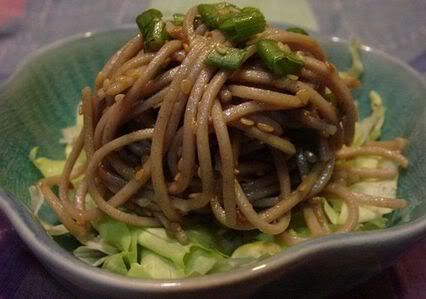
Soba Noodles with Sesame Seeds

I always think of Thursdays as Nigella days since that's the day they air her cooking show on television. They are re-playing the episodes from Forever Summer which is great inspiration since the weather is so hot here. I love the way the episodes are colour coded and last week's "brown" episode got me going to the kitchen to make these wonderful noodles.

The noodles are so simple to make and taste so cool and inviting. I add lots of toasted sesame seeds and spring onions as I love their taste. You can have the noodles with some boiled/ steamed vegetables and some pan grilled salmon depending on what you fancy for that day. It keeps well too and usually I always make a little extra to keep in the fridge for the next day. Once you made this dish, you'll always keep some soba noodles and sesame seeds in your larder so you can have this anytime you want.

Soba Noodles with Sesame Seeds (from Forever Summer)

75g sesame seeds
salt
250g soba noodles
2 teaspoons rice vinegar
5 teaspoons soy sauce
2 teaspoons honey
2 teaspoons sesame oil
5 spring onions

Toast the sesame seeds in a dry frying pan over medium heat until they look golden brown, and tip them into a bowl. Take care you do not burn the seeds or else it will be bitter so monitor them closely.

Bring a large pan of water to the boil and add some salt. Put in the soba noodles and cook them for about 6 minutes (or according to packet instructions) until they are tender but not mushy. Have a bowl of iced water waiting to plunge them into after draining.

In the bowl you are going to serve them in, mix the vinegar, soy sauce, honey and oil. Then finely slice the spring onions and put them into the bowl with the cooled, drained noodles and mix together thoroughly before adding the sesame seeds and tossing again. Leave the sesame seed noodles for about half an hour to let the flavours develop, although this is not absolutely necessary or sometimes even possible.

The portions serves two for dinner with a little leftover for lunch for one person.

Image hosted by Photobucket.com

Wednesday, August 10, 2005

Ramly Burger

Last night as we had to run some errands, we had a quickie dinner at the Ramly burger stall. These burgers are Malaysian made and extremely popular at night as the burgers taste so much nicer than McDonalds, it's locally made (so support Malaysian brands!) and it's cheaper than the fast food joints. It seems it's so popular in Singapore that a newspaper article did a feature on it where it's fans confessed to smuggling the burgers across the Causeway at the risk of being caught.

Not only do the Singaporeans love Ramly's it seems quite a lot of people do also. Their turnover for their processed food sales that includes the beef patties, frankfurters and nuggets sold to the burger stall owners and the supermarkets was an estimated RM60million last year. Not bad for a company that started out in 1979 just as a mobile kiosk selling these burgers.

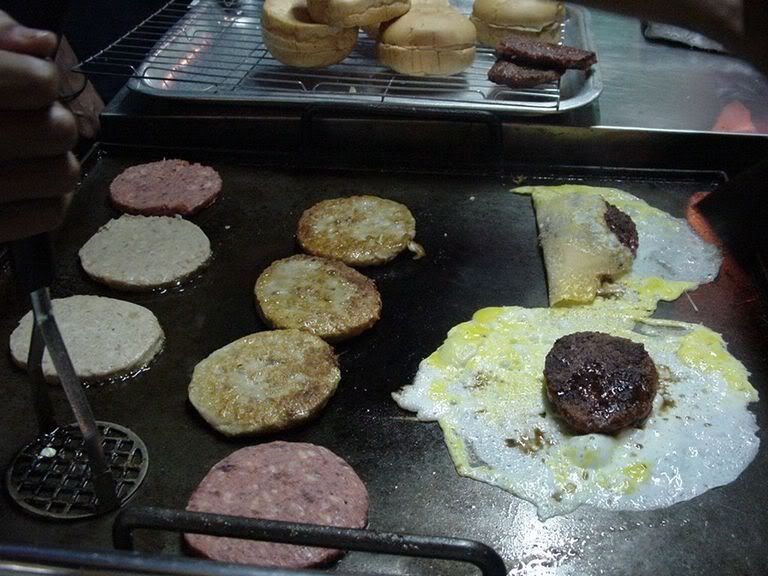
Back to our burgers, we ordered the specials that includes beef patties wrapped in an egg omelette. Here you can see the guy cooking the patties and the specials at one side. You crack an egg and spread it thinly on the grill. The beef patty is placed inside the egg and wrapped up.

Image hosted by Photobucket.com

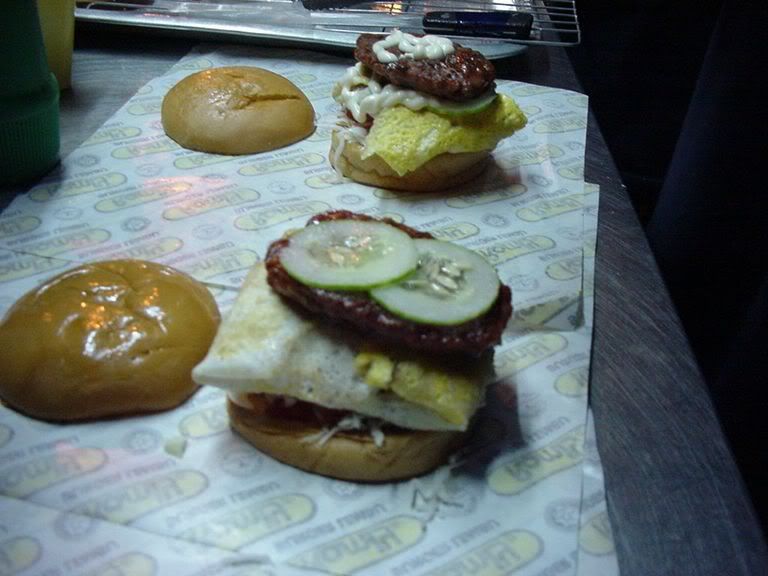
Once it's cooked, it's time to assemble the burger, so a double will have the egg covered patty, some sliced cucumbers and another beef patty on top of a soft bread bun. They will add loads of mayonnaise and sweet chili sauce on top of the burger.

Image hosted by Photobucket.com

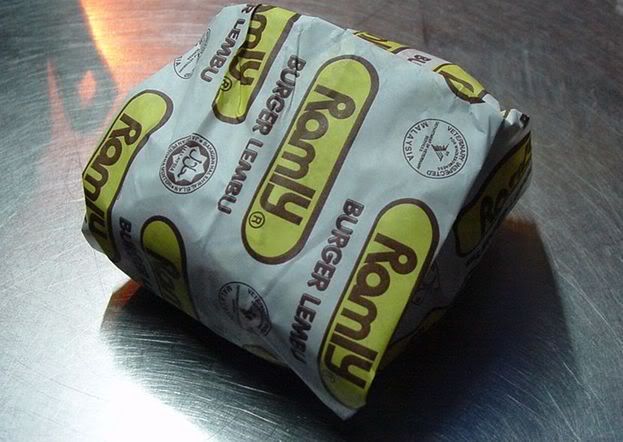
Then it's all wrapped up in Ramly paper that shows it's halal and approved by the Veterinary Services in Malaysia.
Try and eat these burgers as soon as possible as it can get soggy with all the mayonnaise and sweet chili sauce they add on.

Image hosted by Photobucket.com

Tuesday, August 09, 2005

IMBB 17 - tasteTea Round-Up

Clement of A La Cuisine! has been working very hard to summarise all the entries for last month's IMBB which was mammoth. This IMBB had ninety participants with over a hundred dishes!

He has come up with a unique way of posting the round-up, in little segments every few days. Part one and two has been posted with part three on the way soon. So moosey over to Clement's site at A La Cuisine! and see those wonderful entries, then start planning your next tea party as those ideas and recipes are so fantastic that you'll want to try them out straight away!

Hoong Kee Seafood Porridge

Although I now live in Kuala Lumpur, I still haunt my favourite places in Petaling Jaya as I grew up there. One of the places which I like to go to is this seafood porridge which is at Petaling Jaya New Town.

In Malaysia, porridge is usually served in hawker stalls and dim sum places. Recently I read that the new trend is porridge steamboat where you cook your food in the porridge. You can have your porridge in a variety of ways. The Teochews serve it plain and watery but with a variety of side dishes. The traditional side dishes are deep fried salted fish, salted duck egg, salted vegetables and soya sauce stewed duck and tofu. Then you have the flavoured porridge which is cooked with fish slices, meat and century eggs. If you order the fish porridge, usually they will serve you a piping hot bowl of porridge and a plate of thinly sliced raw fish with slivers of ginger. You toss in the fish slices and mix it in your porridge which will cook it instantly.

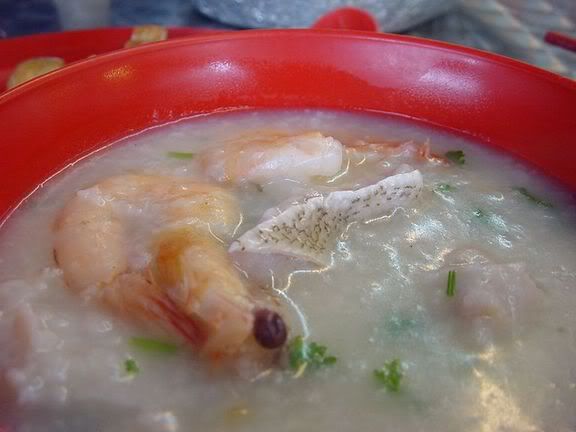
In this porridge stall, they are famous for their claypot seafood porridge. They will cook the porridge in a claypot and add seafood like dried scallops, fish slices, tiger prawns and fish paste inside. The porridge is served to you in the claypot which helps retain the heat so you always get piping hot porridge during your meal. A few years back they used to serve it with crab meat but that seems to have dissapeared from the claypot recently. The porridge is "sweet" with the addition of the seafood and smooth. I wanted to take a picture of the claypot it was served in but steam was fogging up my camera lens so I settled for a picture of a cooler porridge served to me.

Hoong Kee Seafood Porridge
8, Jalan Tengah
Off Jalan Yong Shook Ling
Petaling Jaya New Town
(next to the United Overseas Bank)

Open for breakfast and lunch only.

*Disclaimer: The opinions expressed here is entirely based on my personal tastebuds and may vary for others. The reviewer also declares that she has not received any monetary or non-monetary compensation from the restaurant for writing this review.

Image hosted by Photobucket.com

Monday, August 08, 2005

Edamame Mint Pesto Pasta

Ever since I read about Eric Gower's cookbook, The Breakaway Japanese Kitchen I have always wanted to get it. Unfortunately it was sold out after I read the review of it sometime back but I finally found it at Kinokuniya. It must be popular as I bought it about three weeks ago as they had two copies and last week when I went back to Kinokuniya, the second copy was gone also. So far, I only know Borders Berjaya Times Square has one copy in Kuala Lumpur.

A quick search over Google indicates that to date, two bloggers have reviewed his book and made a few of his recipes, i.e. Chika from She Who Eats and Renee from Shiokadelicious. Incidentally for all you Renee fans, she is back from a long exodus from blogging and she has posted up some sinfully good chocolate cakes on her blog, so hop over there right now.

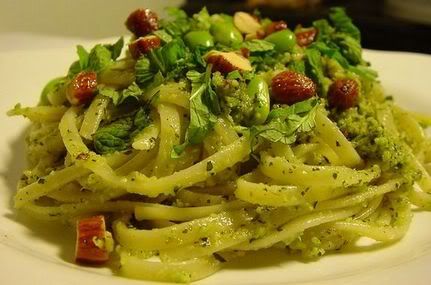
As they have tried quite a few of the recipes, I decided to try the Edamame Mint Pesto which appealed to me as I love edamame. The recipe is extremely simple to make and once you have all the ingredients at home, you can whip it up after work. I bought some frozen edamame from Jusco and boiled them in hot water for a few minutes to cook them, then shell them. The edamame beans looked so wonderfully green and plump, I could not resist but pop some in my mouth. I reserved some for topping the pasta once it was tossed with the pesto. I liked the pesto as it was not as rich as the usual Italian pesto (no parmesan cheese!) and the mint flavours are quite faint. Since I was low on my pine nuts, I used almonds for the recipe. The pesto is a bit dry so I added a bit of pasta water when mixing it with the pasta.

Edamame Mint Pesto (Serves two)

1 cup edamame, cooked and shelled (reserve a few to top pasta)
1/4 cup smoked almonds, cashews or pine nuts (reserve some for topping)
1 cup fresh mint leaves, chopped and 1 tablespoon reserved
1 clove ultrafresh garlic, peeled
1/2 cup fruity extra virgin olive oil
sea salt
freshly ground black pepper
pasta (I used linguini)

Set a large pot of salted water to boil for the pasta. Combine the edamame with everything else (except the pasta) in a blender and blend. Cook the pasta until al dente, drain it and return it to the pot. Reserve some of the pasta liquid. Mix the pasta with the pesto, adding a bit of pasta water if it is too dry. Make sure you add bit by bit or else your pasta will be a soggy mess. Transfer to large warm bowls, taste for salt, pepper liberally and top with extra mint, extra almonds and edamame.

Image hosted by Photobucket.com

Saturday, August 06, 2005

Weekend Cat Blogging 9

It's the weekend again which means kitty cat time where the felines take over this space. Last week, they had to share the spotlight with IMBB but this weekend, it's all theirs. If you want to join us, just leave a comment with your permalink and add weekend cat blogging tag to your post!

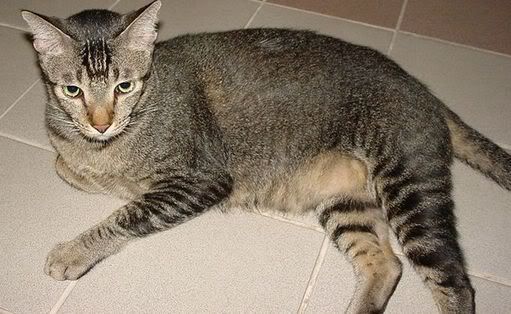
This is Kits, the "man of the house" as he is the oldest and the only male cat I have. A few years back when Splashie Boy was posted to Dallas for work, I decided that I will get a cat to keep me company. I looked at some shelters but there were no kittens at that time. My friend called me up and told me a cute kitten had wandered into her house and was brave enough to share her cat's food. I went to take a look at the kitten and found him adorable (he has the longest tail ever) so I adopted him. Since then, Kits has basically taken over the household and he rules it with an iron paw.

Do check out the other kitty cats around the world:

1) Kiri looking pensive in Sydney at Clare Eats;
2)
Catgirls cooking up mischief in the USA at Tiger & Strawberries;
3) Ginger kitty sitting on the potting bench in Missouri at Farmgirl Fare;
4) Ywette enjoying the sun in Sweden at Anne's Food;
5) Mrs. D's kitty enjoying the car bumper in Washington at Belly Timber;
6) Stephanie's shy kitty from the Daily Vegetable; and
7) Cin's kitty who has a view to kill from A Few of My Favourite Things!

Image hosted by Photobucket.com

Friday, August 05, 2005

Clams Ahoy

Yesterday morning I made a rare visit to the Pasar Tani (Malay for agricultural market) that is held every Thursday at Section 17, Petaling Jaya. I always see the stalls at the side of the road whenever I drive pass but somehow I never ventured in. I must admit I had great fun walking through the market and they have so many things there. I took lots of pictures which I will post one day but I thought I'll talk a bit about what I got and cooked last night for dinner.

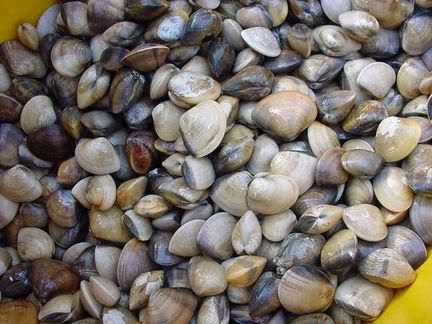
I saw this amazing stall that sold all kinds of clams, green lipped mussels, bamboo lalas and even oysters in the market. I decided to get some of these clams, they're called Venus Clams which I have eaten before in seafood restaurants. The clams were reasonably priced at RM4 per kilogram. A real bargain as you'll probably pay almost triple of the price for a dish of these cooked clams in any seafood restaurant in town.

Image hosted by Photobucket.com

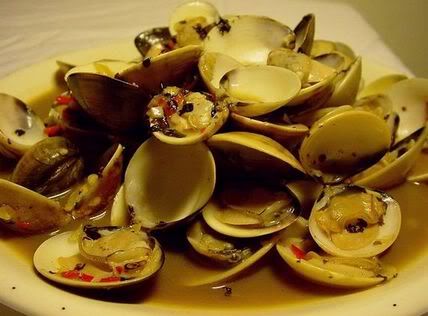
The man who sold me the clams advised me to soak them in some salt water for about two to three hours to remove the sand and grit. Then I consulted my mother on how to cook them and she said that I could fry them up with some black beans and chillies. I managed to find a recipe for them in one of my bilingual magazines and it worked out very well. I was originally going to add sweet basil leaves in my clams but I forgot to add them at the last minute. Only downer was my sauce was just a bit too watery so the next time round I need to reduce the water added. Sorry about the slightly less than perfect picture of the cooked clams, in future I should not use the white balance function in my camera as I seem to end up with less than white pictures!

Stir Fried Clams with Fermented Black Bean Sauce

*600 grams clams or lalas, soaked in salt water
20 pieces of sweet basil leaves
1 tbsp chopped ginger
1/2 tbsp chopped garlic
1 tbsp chopped red chilli
2 tbsps fermented black beans (I usually chop them a bit)
100 ml water
1/2 tbsp sugar
1 tsp sesame oil
1 tsp shaoxing wine
cornflour

Heat up about 1 to 2 tbsps of oil in a wok and saute the ginger, garlic, chilli and black beans until fragrant. Put in clams, water and the other seasonings except the cornflour. Stir to mix everything together. Cover the wok and cook until the clams open. Add in the sweet basil leaves and thicken with some cornflour mixed with water. Dish up and enjoy with some piping hot rice.

* I adjusted the recipe to suit my 1 kilogram of clams
Image hosted by Photobucket.com

Thursday, August 04, 2005

Goldview Hakka Food

Last week, I did promise to blog more about Hakka food but then I realised although we went to eat at a Hakka restaurant, we didn't really order the traditional Hakka dishes. So sorry about that but we did try a variety of dishes which were pretty good too and I thought I will blog about that instead.

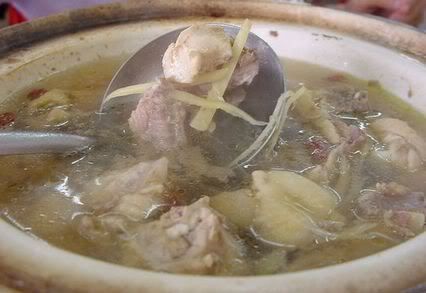
We had this Claypot Wine Chicken that is a combination of Chinese yellow rice wine with chicken and ginger shreds. This is an extremely popular dish for Chinese women after giving birth as the Chinese believe the ginger will help get rid of the wind you suffer from as an after effect. During their one month confinement, Chinese women get fed this all the time until they're sick of it. I actually like this dish once in a while as it's pretty tasty and great with white rice.

Image hosted by Photobucket.com

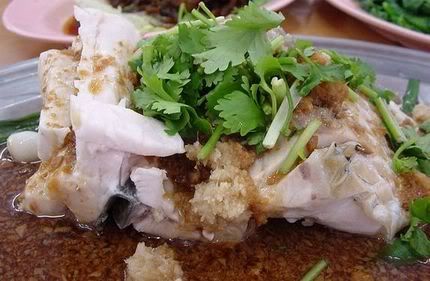
We had a steamed grass carp with a minced garlic and ginger sauce that was cooked just right. The sauce was not too salty and the fish is quite light and tasty. One thing about this place, it does not seem to be heavy handed with oil like other Chinese eateries.

Image hosted by Photobucket.com

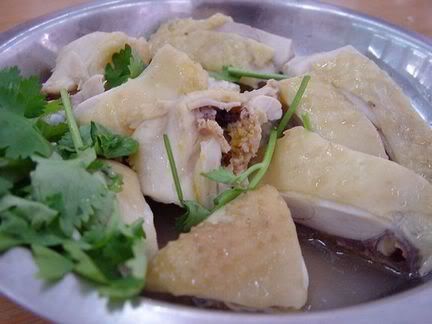
This is their Salt Baked Chicken which was not that fantastic. The chicken was not salty enough. The proprietor came around to ask us feedback about the food and we told her the chicken was not salty enough and she said she did not want to add to much salt for health reasons. Fair enough but somehow it just does not taste right without that extra salt.

Image hosted by Photobucket.com

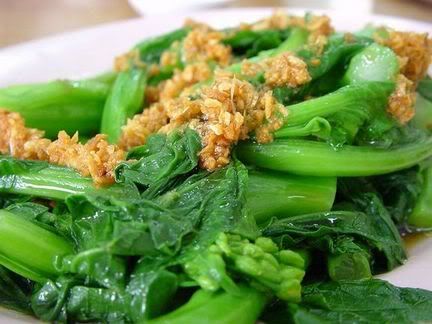
I think this is Steamed Choy Sum with fried garlic. I liked this as there was not much oil in the dish. Usually whenever you order the vegetable dish from a chinese restaurant, it is swimming in a pool of oil which I hate.

Image hosted by Photobucket.com

The place is relatively new and is open for lunch and dinner. I wouldn't say the food is super fantastic but I think it's a pretty decent meal if you're around the Petaling Jaya area and want some home cooked food with less oil. You can try their Hot Pepper Soup the next time you're there as they serve it with some unusual items like shellfish lala, lamb and chicken.

Goldview Hakka Food Restaurant
Sea Park (opposite Giant supermarket and post office)
Petaling Jaya

Closed on Tuesdays

*Disclaimer: The opinions expressed here is entirely based on my personal tastebuds and may vary for others. The reviewer also declares that she has not received any monetary or non-monetary compensation from the restaurant for writing this review.

Wednesday, August 03, 2005

Hot Mama

Believe it or not, that is the name of a restaurant we found last Saturday. We have been making quite a number of trips down town during the weekends as Splashie Boy has been slowly checking out the price of IT gadgets before the start of the PIKOM Computer Fair this coming weekend. For the non-Malaysians, the PIKOM Computer Fair is this fair where you get all these computer bargains as the vendors dispose off their old stocks. You can pick up great deals there.

I stumbled on this restaurant when I was walking around Sungai Wang Plaza and it looked so interesting that I dragged Splashie Boy to try it. The place is done up quite modern with splashes of orange and cream. They have these great long benches that are ideal for quite a number of people to sit. It seems this place is owned by Vietnam Kitchen, a popular Vietnamese restaurant in Malaysia but this caters for the halal crowd. You can see some of Vietnam Kitchen's signature dishes here like their Beef Noodles and Chicken Chop. The place is relatively new as it only opened about two months ago.


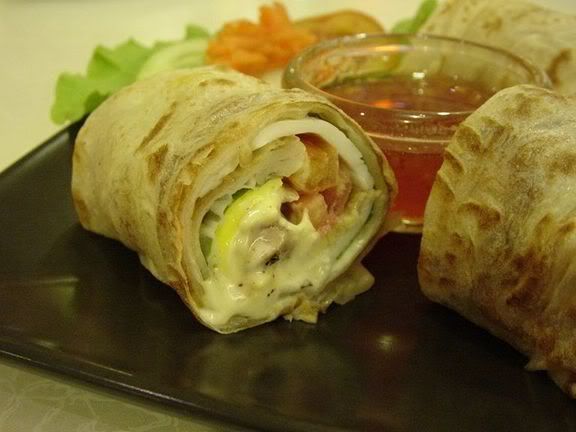
We tried the Cheesy Chicken Canai Threesome which is a roti canai stuffed with shredded roast chicken, lettuce, cheese and mayonnaise. For the non-Malaysians, roti canai is an Indian pancake that is usually eaten plain or with curry. It tasted good and the chili sauce that went with it was fantastic.


Image hosted by Photobucket.com

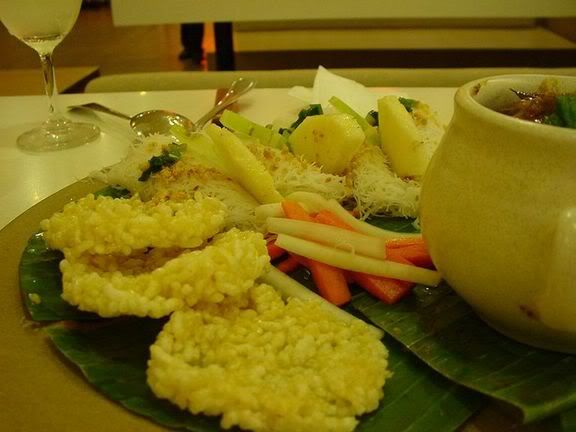
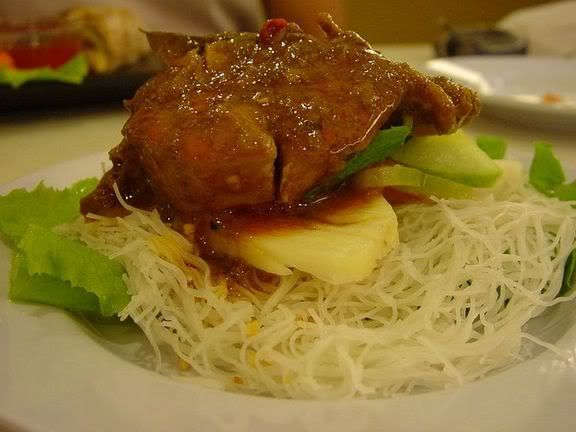
The waitress recommended us this dish i.e. the Flaming Duck Combination as she said this is extremely popular. We changed the duck curry to chicken curry as Splashie Boy does not like duck. The platter comes wth home made rice crispies, vermicelli, vegetables and fruits.

Image hosted by Photobucket.com

The waitress showed us how to assemble it which was great as we were quite lost when we got the platter. It kinda felt like eating a mix of roti jala and the vermicelli bit reminded me of putu mayam. The curry chicken was nice and not too spicy.

Image hosted by Photobucket.com

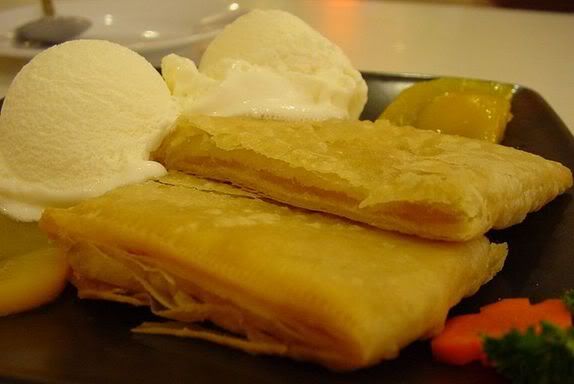
For desserts, we ended up ordering the Ice Cream Lotus Pastry which is basically the Lotus Pancake (wor pang in Chinese) that is a popular Chinese dessert served with ice cream. This should be the way those Chinese restaurants serve it as the pastry was not too oily but buttery melt in the mouth and went so well with the ice cream.

Image hosted by Photobucket.com

The menu also offered quite a number of interesting items with fantastic pictures to lure you to try them. Some items were old favourites just presented in an interesting way like the Ayam Percik with Rice Balls. The Ayam Percik is a famous Kelantanese dish that consists of a piece of spicy marinated chicken skewered on a bamboo stick. In Kelantan, it's usually grilled over a charcoal fire and then smeared with a nutty coconut sauce. Here, they serve it with rice balls. Then there is their Chinese Stir Fried Pasta, that is fusili pasta fried ala Penang kuayteow style. It looks quite unusual on the menu as the pasta has dark soya sauce in it. Oh and another thing I definitely want to order the next time round is their Crispy Shrimp Bananarama. The menu describes it as a roll of shrimp and banana wrapped in rice paper which is deep fried. Sounds really yummy. The food is also reasonably priced to contend with those Hongkong char chan tengs that are popular around that area so you won't burn a hole in your pocket.

Hot Mama
E-50, Fourth Floor
Sungai Wang Plaza
Jalan Sultan Ismail
55100 Kuala Lumpur

Tel No: 03 - 2148 1336
(You can access the restaurant from the Metrojaya car park or through the shopping complex by just going up the escalators until the top part)


*Disclaimer: The opinions expressed here is entirely based on my personal tastebuds and may vary for others. The reviewer also declares that she has not received any monetary or non-monetary compensation from the restaurant for writing this review.

Tuesday, August 02, 2005

Crispy Peanut Pancake

One of the best things about living in Malaysia is you never grow hungry with the huge selection of food we get throughout the day and night. Food is also priced reasonably so it does not burn a hole in your pocket.

Recently we were at Section 17, Petaling Jaya for dinner and we stumbled upon this crispy peanut pancake maker. Section 17 has quite a few roadside stalls that sell reasonably priced food as it's still known as a student hangout. University of Malaya is nearby so quite a number of the students rent houses around this area. Even the morning market is said to sell the cheapest produce in Petaling Jaya.

This crispy peanut pancake is known as Apam Balik in Malay or Ban Chean Koay/Ban Jian Kway in Hokkien which means "a slow, take a long time to cook cake". One can trace these pancakes back to pre-World War II days where they were cooked over a charcoal stove. There are two kinds of this pancake, the crispy and soft kind. The soft kind is usually cooked in a bigger cast iron pan (about 24 inches) and sprinkled with peanuts in the middle. It takes a while to cook it and once it is ready, it is folded into half and cut into smaller slices to be sold.

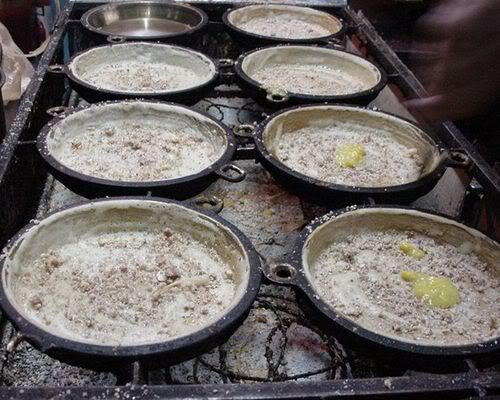
The crispy kind is usually made in smaller pans (about six inches). The batter is ladled into the pan and spread thinly and evenly. Then it is sprinkled with a sugar and crushed peanut topping. The Malay Apam Balik version usually adds a dollop of creamed corn in the middle. The chinese version is usually plain peanut and sugar topping. In Penang, there are some roadside stalls that even offer a wider variety of toppings that range from savoury grated cheese, ham and sausage or sweet grated coconut, peanut butter and banana. The Penangites call it Aki Pancake after the name of the stall whose owner's name is Ah Kee.

Image hosted by Photobucket.com

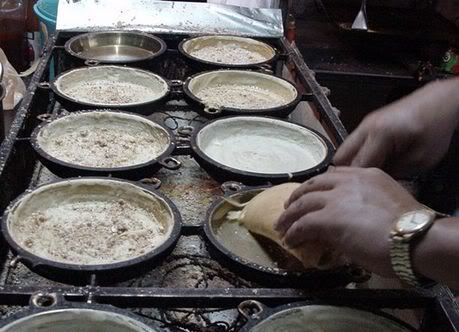
Once the pancake is ready, they will scrape the sides with a knife and then fold it quickly before it hardens.

Image hosted by Photobucket.com

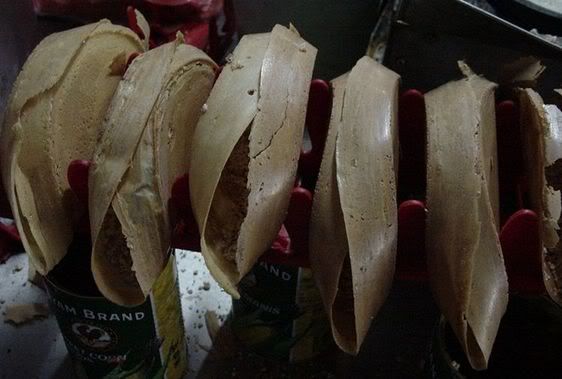
The pancake is then placed in these racks ready for customers to buy them. It is best eaten piping hot from the pan so you get to savour the crispy pancake and the warm insides.

Image hosted by Photobucket.com

Sunday, July 31, 2005

IMBB 17 - tasteTea Bites

You know, I love IMBB's and I'm always looking forward to each theme everytime they're announced. Just participating in an IMBB helps me understand so much about that particular theme especially after researching and discussing with a few people. Then the round-ups are so wonderful as I get to see and learn from the other bloggers their methods, tips and ideas in handling that particular theme.

This month's theme, "tasteTea" which was introduced to us by Clement from A La Cuisine! really got me excited. Thanks to Clement for hosting and I love the idea of showcasing a few entries each day. Although I do drink tea on a daily basis, I have not thought much about using them in my food. I have only eaten once in a Chinese restaurant called Purple Cane which specialises in dishes made from tea but that was quite sometime back. All I remembered about that meal was the dishes were all light, refreshing and healthy. Thus I started hitting those recipe books and the internet to understand more about cooking with tea.

During my research, I had some clear parameters on what I wanted to cook, it had to showcase chinese tea since that is my heritage and it had to have a healthy element which was the basis of drinking tea. Thus I settled on my trio of teeny weeny tea bites which uses jasmine tea and green tea.

Tea Smoked Salmon Sushi

Tea smoking seems to be one of the popular methods used in tea cuisine. You can mix whatever you wish into the mixture to be heated up to create smoke. In this recipe, I adapted from
Flavours magazine, the salmon is smoked over a mixture of brown sugar, rice and jasmine tea. Alternatively you can use green tea mixed with orange peel or oolong tea leaves in your smoking mixture. Anything can be smoked; chicken, duck, poussin, tofu, prawns and salmon. I chose salmon as part of the theme for my sampler menu was seafood for that light taste.

The salmon smoked beautifully and smelt so wonderful. Smoking it gave the salmon a lovely brown tinge with the inside still pinkish. I decided to make some sushi with this salmon together with some suzuki seabass fillet sashimi and wakame. Instead of using the traditional nori (seaweed) wrapper for my sushi, I opted for slivers of daikon white radish that were a crunchy and fresh addition. This was topped with a touch of ebiko. The sushi tasted wonderful and the salmon was so full of flavour and tender. Splashie Boy loved the combination and even my kitty, Ally wanted a piece of it since it smelt so nice! (We had to fight her off from stealing the sushi during the photosession time)

Marinade
2 tablespoons Chinese rice wine (I used mirin since I did not have any rice wine)
4 tablespoons soy sauce
2.5 cm younger ginger, grated
generous pinch of five spice powder
1 teaspoon Sichuan peppercorns, roughly crushed
1/2 teaspoon caster sugar
salt to taste
4 x 150g skinless salmon fillet

Smoking Mixture
150g jasmine tea leaves
150g soft brown sugar
150g rice
Mix the marinade ingredients together and marinate the salmon fillets for four to six hours, turning at least once.

Mix the smoking ingredients together. Line a wok with two layers of foil and place the smoking mixture on top of the foil. Lightly oil a steel rack with holes and place it over the mixture. Cover the wok and heat it until it starts to smoke. This should take about ten minutes.

Place the fish on the rack. Replace the lid and wrap damp tea towels tightly around the edge to prevent smoke from escaping. Smoke the fish over a medium heat of ten to fifteen minutes or until cooked.

To assemble the sushi: slice slivers of the daikon white radish with a vegetable peeler. Cut a piece of the tea smoked salmon. Cut a piece of seabass fillet sashimi (I used ready cut sashimi so I rolled them instead since they were quite thinly sliced. If slicing them yourself, cut it into chunks) Assemble tea smoked salmon on top of the daikon radish, add a bit of wakame at it's side. Place the seabass fillet next to the salmon and roll up the radish. You can tie it up using a piece of chive (soft part). Sprinkle some ebiko on top of the sushi and serve.
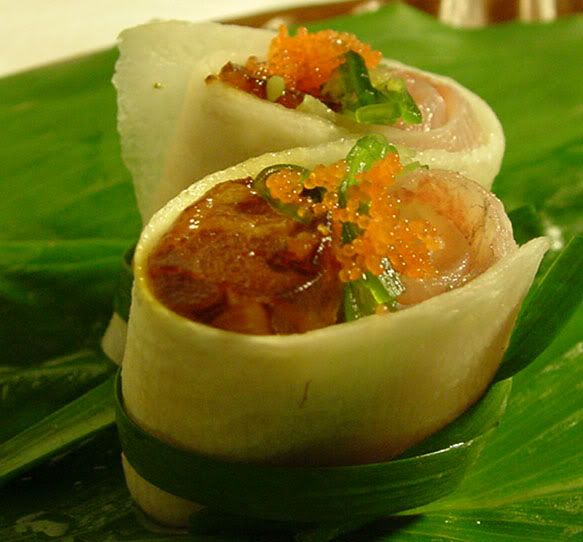
Image hosted by Photobucket.com

Baked Wakame Tart with Seared Green Tea Scallop

I was inspired to make a green tea salt after watching one of Jamie Oliver's television shows where he made some rosemary and lemon salt. Not sure which episode it was but I remember he had an Elvis Presley impersonator over for lunch so he made the salt to go with chips. Initially I thought of a green tea and ginger salt but after I mixed up the ingredients, I felt the ginger overpowered the delicate smell of the green tea. Instead, I re-mixed another batch just solely made from green tea and it was aromatic and light.

I had recently purchased a new cookbook,
Simple by Jimmy Chok so I borrowed the idea for a wakame tart from him. In his recipe, he uses puff pastry but in my version, I cheated a bit and used a ready made pastry case. This was baked in the oven until it was hot and crispy, then sprinkled with some wakame and topped with a seared salmon sprinkled with my green tea salt.

Green Tea Salt
Grind one teaspoon of green tea leaves till a powder in a mortar and pestle. Add slightly than one teaspoon of sea salt crystals to the green tea. Grind the sea salt and mix with the green tea.

Tart
Puff pastry, cut into a small circle about 2.5cm diameter
2 grams of wakame
1 scallop
Green tea salt as above
Cooking Oil

Bake the pastry in an preheated oven at 180C for about 4 minutes. (If using ready made pastry case, follow the manufacturer's instructions) Remove and top with wakame. Return to oven and bake further until pastry is cooked. Season the scallop with the green tea salt. Heat the oil and sear the scallop over high heat. Place scallop on top of tart, sprinkle with some green tea salt and garnish with some green tea before serving.
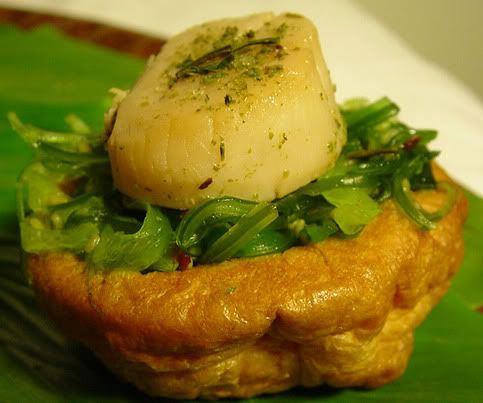
Image hosted by Photobucket.com

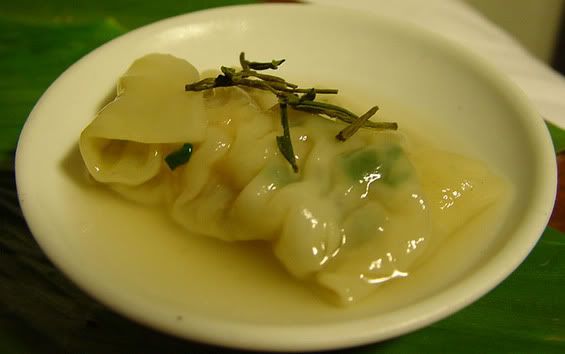
Prawn, scallop and green tea wanton served with a broth perfumed with green tea

Image hosted by Photobucket.com
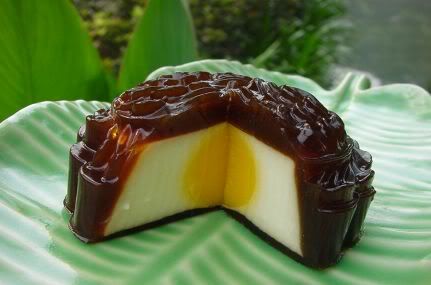
The last item on my tea bites menu was this delicately flavoured wanton. Made from finely chopped scallops and prawns, I had added some chopped up green tea leaves which was inspired after reading about a similar dish in Cooking with Green Tea by Ying Chang Compestine. The wanton was loosely based on a recipe for a prawn and scallop ravioli from my Simple cookbook. The broth to accompany the wanton was also infused with some green tea leaves.

Wanton Filling
20 grams prawns, peeled and chopped
20 grams scallops, chopped
5 grams of shallots, peeled and chopped
Green tea leaves, infused and chopped
One stalk of chives, chopped finely
1 teaspoon of soy sauce

Wanton skins
Chicken broth made from chicken bones, peppercorns, bayleaves, carrot, onion and celery
Green tea

Make the chicken broth by boiling chicken bones, a few peppercorns, 1 bay leaf, 1 chopped carrot, 1 chopped stick of celery, 1 chopped onion for about two hours. Skim the surface of the stock to rid it of impurities. It is preferable you make the broth a day ahead so you the oil in the stock can rise and be removed easily. Before serving the broth with the wanton, add some green tea leaves into an infuser and boil it. This will give the broth a tinge of tea in it's taste.

Infuse dried green tea leaves for about five minutes. Remove the tea leaves which will unfurl into small buds or leaves. Chop them finely and mix them into the wanton mixture. Spoon a bit of the mixture on a round shaped wanton skin, fold them halfways to enclose the filling. Poach the wanton in some simmering salted water and scoop out onto a bowl or a plate. Add a bit of the infused chicken broth on top and serve with a garnishing of green tea leaves.
IMBB 17 - Thunder Tea Rice Ritual

In this month's Is My Blog Burning?(IMBB) hosted by Clement from A La Cuisine! all the way in Toronto, besides creating a tasteTea dish with any type of tea, he has also asked us to blog about tea rituals. Since I am part Hakka (my father's side), I decided to talk a bit about the famous Thunder Tea Rice (Lui Cha Fan) that is unique to the Hakka clan.

The Hakka clan is said to originate from the Northern China provinces of Shanxi and Henan. However due to war and chaos, they were forced to migrate to Southern China. During their migration, they had to go through a lot of hardship and were not welcomed in new settlements. However, the clan people were a practical lot and endured the hardship and never had any qualms of grabbing an opportunity for a better life. This led them to be called "guest (Hak) people (Ka)" since they were often guests of new settlements.

I guess that is probably why my grandfather migrated to Malaysia from Southern China as he wanted to search for a better life. Unfortunately he died when he was very young leaving the family to be taken care by my grandmother. She had a mammoth task looking after thirteen children during those days but like my dad always said, she was a typical Hakka woman who was strong and could deal with anything.

Hakka cuisine is said to be quite "rough" or unrefined to be fashionable but nowadays, you see quite a number of establishments selling typical Hakka dishes like yong tau foo where they stuff fish meat mixed with ground meat into vegetables or bean curd. They also use a lot of preserved vegetables in their dishes as nothing is to be wasted during those hard times. I will be blogging more about Hakka food next week as I visited a Hakka restaurant recently.
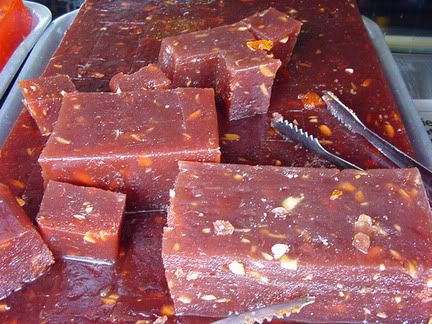
In the Hakka clan, there is a sub-group called Ho Poh and they have a unique tradition in this Thunder Tea Rice (Lui Cha Fan). The thunder created is said to signify the noise made when one is preparing the dish which involves a lot of grinding of tea leaves and chopping vegetables and nuts to small bits that accompany this dish. Traditionally, the Ho Poh eat this dish on the seventh day of Chinese New Year. This particular dish seems to have quite a following due to it's healthy nature and besides restaurants specialising in Hakka cuisine, you can find it in organic restaurants.
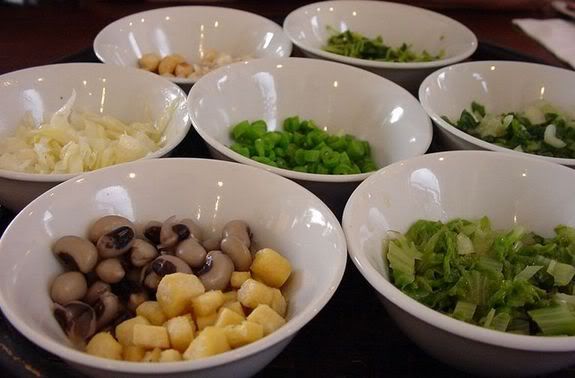
My lui cha fan below is actually from an organic restaurant called Ecogreen, located in Bukit Kiara. The ingredients are all organic and totally healthy. The lui cha fan comes with seven condiments of tofu, groundnuts, pickled radishes and various vegetables which are all chopped up in small bits.
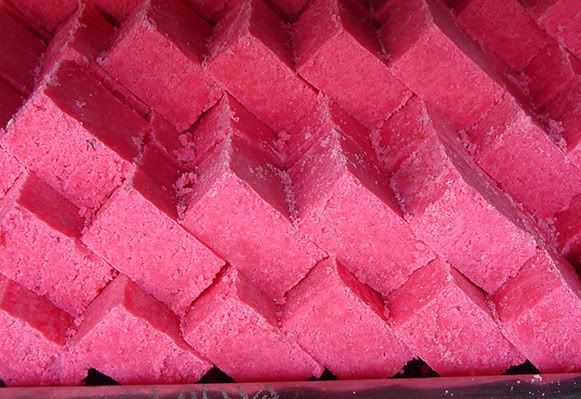
Image hosted by Photobucket.com

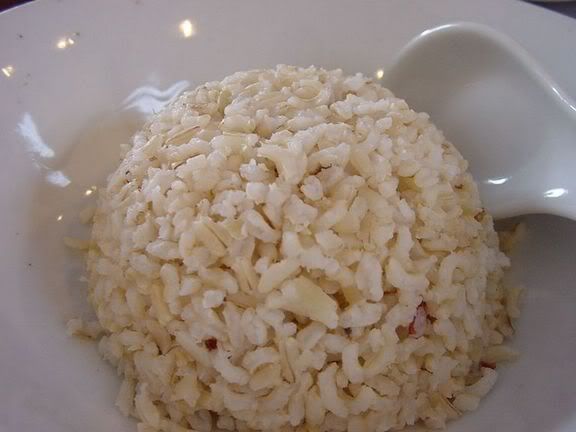
To maintain the health perspective of this dish, brown organic rice was used that is steamed so it's fluffy and soft.

Image hosted by Photobucket.com

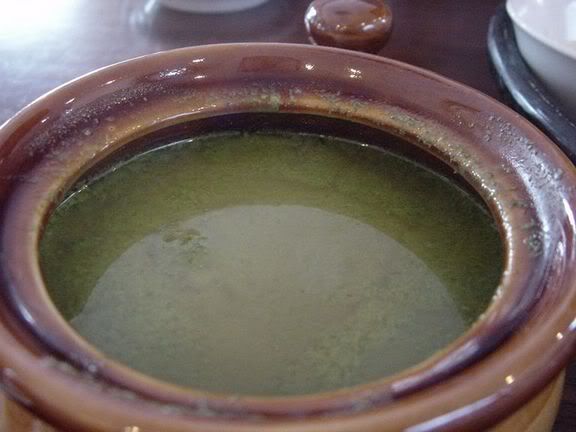
The tea part is in the soup which is brewed from a mixture of tea leaves, basil and mint. The mixture is grounded in a lui cha pot till it becomes a paste. Then it is wrapped in a cloth and infused in hot water to produce this tea. The tea is served piping hot.

Image hosted by Photobucket.com

To eat your lui cha fan, you pour the condiments into your rice and add the hot tea. As it is an acquired taste (some say the tea can be too bitter or taste funny), add as much as you like. The dish can be quite filling even though it does not look it and you can omit the rice if you wish.

Saturday, July 30, 2005

Weekend Cat Blogging 8

It's the weekend again and kitty time! This time round, I thought I will feature the kittens who came to visit from next door. My neighbour's cat recently had a trio of ginger kittens who all look alike except for slight variations to their tail, spots and stripes.

A favourite nook for one of the kittens is on top of the wall just directly under the bougainvillea tree. The kitten loves to stretch and sleep under the shade waiting to see who comes to the house. Kinda like a guardhouse kitty!

Image hosted by Photobucket.com

This naughty kitten decided that climbing up a big tyre would be great fun. Earlier, it was actually sleeping on the tyre but we couldn't catch that as it woke up just when we wanted to snap it.

Image hosted by Photobucket.com

Other cats joining us this time round are:

Clare's cute "toddler" Kiri in Sydney;
Jasmine's three cute cats in Malaysia;
Keiko's kitty from England;
Mrs. D's kitty enjoying the yard view from Washington;
Barbara's sleeping kitties from Ohio;
Farmgirl's kitty J2 in the cat cabin from Missouri; and
Anne's kitties, Yvette and Glinda from Sweden

If you want to join us for the weekend cat blogging, send me your link and add a tag called weekend cat blogging for your post.

Friday, July 29, 2005

Ice Kacang

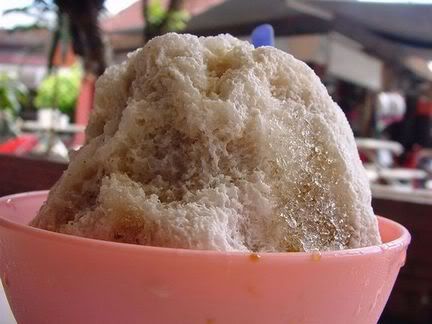
This is the classic Malaysian dessert that everyone loves especially on a hot day. The Ice Kacang (Malay for Peanut Ice) is also known as an ABC aka Air Batu Campur (Malay for Mixed Ice). Essentially, it is a mound of shaved ice packed on top of a mixture of sweet red beans, toasted peanuts, creamed corn and jelly bits. The ice is flavoured with syrup and a mixture of evaporated and condensed milk.

Like any classic dish, there are so many versions as you can vary the syrups, milk and the mixture according to personal taste. Some interesting combinations I have tasted and seen are; sliced bananas in Penang Swatow Lane's version, a scoop of ice-cream to add creaminess to the dessert, sweet Atap Chee (sugar palm seeds) and pureed durian flesh for those who want a bit of adventure. Throughout Asia, the dessert is also known as halo-halo in Phillipines, ruam mit in Thailand and three bean drink in Vietnam with a combination of toppings and syrups to suit local tastes.

Usually the ones you get have lashings of red rose syrup and milk but I am partial to the kind that just uses the brown palm sugar syrup and a splash of evaporated milk like this one below which is found in the old Medan Selera, Petaling Jaya. The shaved ice is so fine that when you put it into your mouth, it melts to give you a creamy and ice cold taste.

Image hosted by Photobucket.com

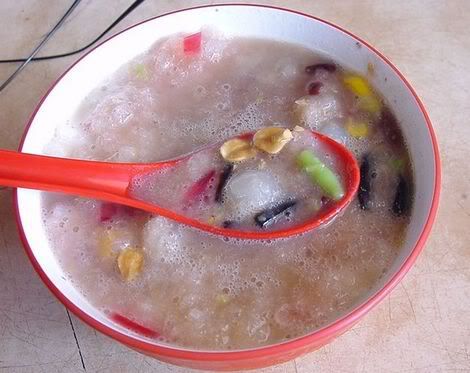
There are two ways to eat your Ice Kacang, you can eat just the ice first savouring the creaminess just like how I do it. Alternatively, you can mash up the ice into the mixture so everthing is mixed up as seen below. For me, I do both; eat the ice until the top of the bowl, then mash it in so it becomes an icy soupy dessert with yummy bits inside. This version has toasted peanuts, some green cendol bits, red jelly bits, sweetcorn, bits of grass jelly (cincau) and sweet red beans.

Image hosted by Photobucket.com

*Gerai Minuman Kim Lain
Stall 38, Taman Selera
Jalan Othman
Petaling Jaya

* There are two stalls serving this version in the Medan Selera, the other one is at the opposite side of this stall and they both flank the chicken rice stall, Kie Kie. This stall's quality of shaved ice can be erratic especially when the old man is not around to serve it. For a more consistent one, you can try the opposite end's stall.

**Disclaimer: The opinions expressed here is entirely based on my personal tastebuds and may vary for others. The reviewer also declares that she has not received any monetary or non-monetary compensation from the restaurant for writing this review

Thursday, July 28, 2005

My Blog has a Toothache

After writing and reading up about all the Indian sweets for this entry, I think my poor blog is now suffering from the ultimate Sugar High! I started my last post talking about the savoury part of my Sunday, here's the sweet and toothaching part.

Besides serving savoury dishes, Lotus Family Restaurants also have a wide variety of Indian/Punjabi sweets and crispies like muruku and etc. I have tried to identify these sweets based on some websites and from discussions with the people from Lotus. I hope I got it right as I am no expert on Indian sweets but if not, do drop me a comment and I will amend the posting if it's wrong. The sweet counter display is right in front of the shop so you're lured to these jewel like sweets from the main road of Jalan Gasing. Usually these sweets are for festivals but occasionally people buy them for snacks or dessert.

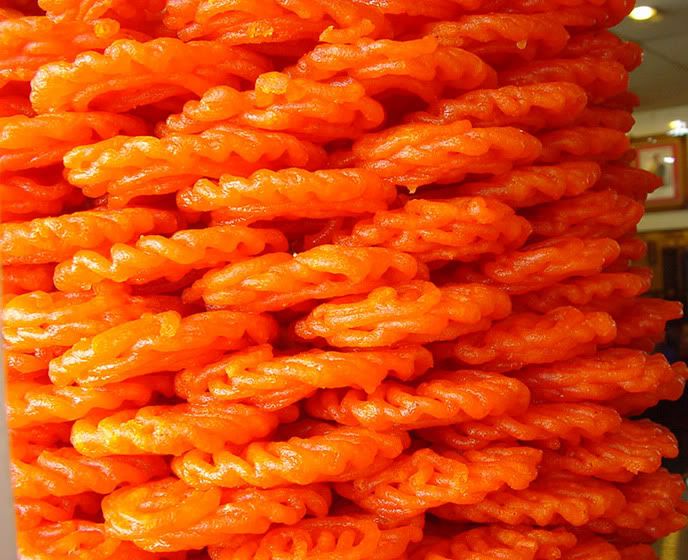
This stack consists of glistening bright orange Jalebi. These sweet crispy round whirls are made from maida (Indian for plain flour), besan (Indian for gram flour) and water. The batter is deep fried in ghee (Indian for clarified butter) then dipped in a sticky sugary syrup. You can either infuse the syrup with some saffron threads to get a subtle colour. If you want to achieve this brilliant orange, you will need to add a few drops of red and yellow colouring.

Image hosted by Photobucket.com

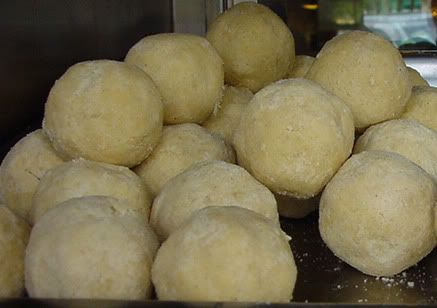
These powdery light brown balls are known as Ghee Balls. It's usually made from finely grinded roasted cashewnuts, flour, ghee and sugar. Pop one ball into your mouth for that melt in the mouth sensation. The Malays have a similar dessert that is usually served during their Hari Raya celebrations called
Kuih Makmur that is made from roasted peanuts.

Image hosted by Photobucket.com

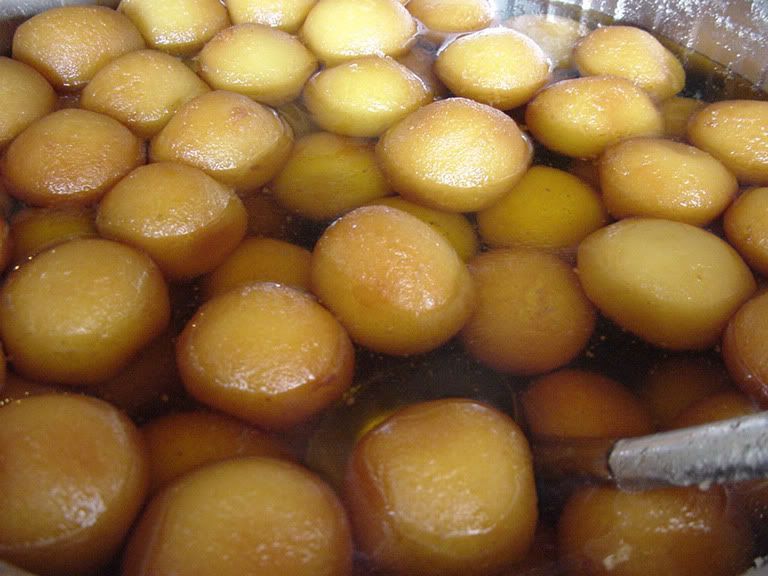
This balls are known as
Gulab Jamun, another popular Indian dessert. Made from milk and flour, these balls are fried in ghee and served with a syrup flavoured with cardamon seeds and saffron.

Image hosted by Photobucket.com

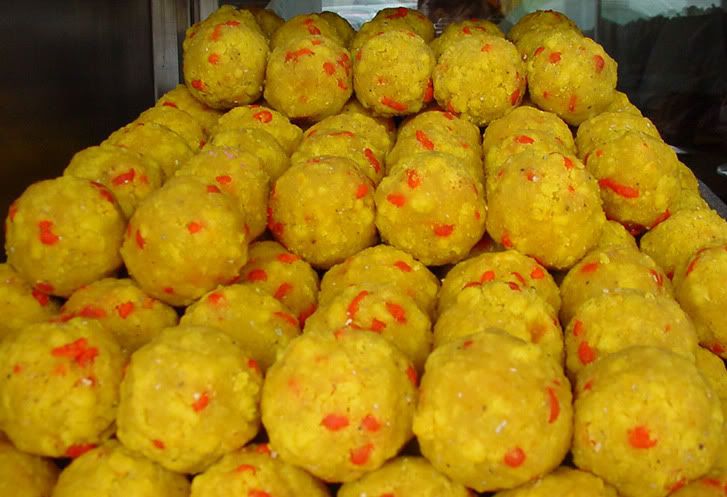
The next dessert is
laddu that is usually made from gram flour, rice flour, sugar, ghee and cashewnuts. It's a popular dessert for Deepavalli when sweets are usually served in the hope that the year ahead will be sweet and happy. Traditionally the Indians will start making the sweets for the festive season after the Navarathiri, a nine-day fasting, which takes place exactly twenty eight days before the festival. Usually they will start on the tenth day as it is an auspicious time to start making the sweets.

Image hosted by Photobucket.com

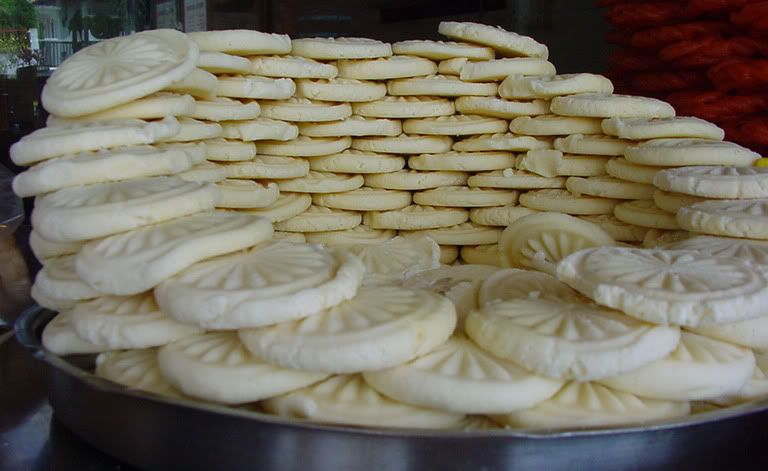
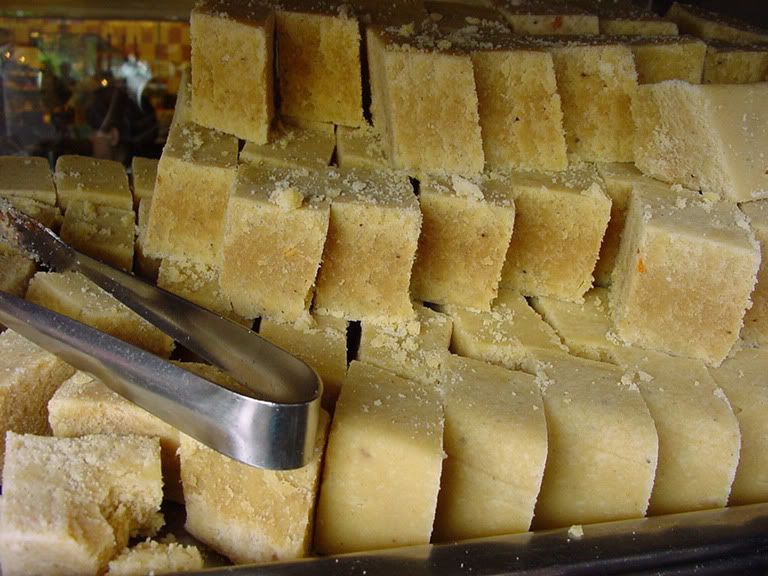
According to Lotus, this is Paalgova/Paal kova which is made from evaporated milk and sugar. This milk is slowly boiled until it is thickens then poured into a mould. Once cooled, you can cut them into shapes. The texture is crumbly and totally melt in the mouth.

Image hosted by Photobucket.com

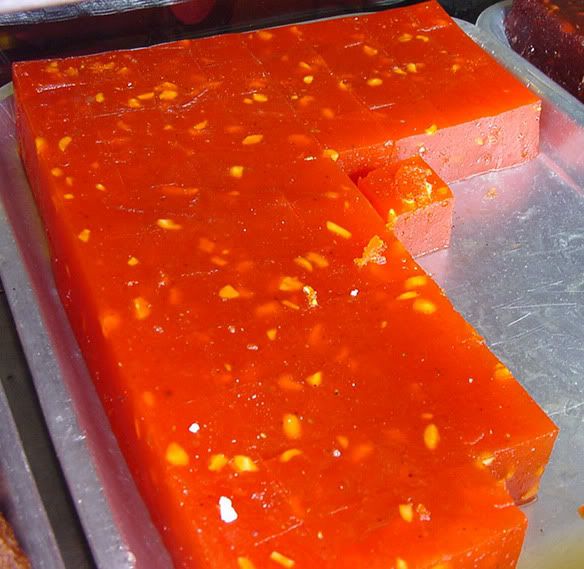
This is Halwa made with bits of almond, cardamon, sugar and milk. Ghee is also added into it and you can colour it with saffron or orange colouring.

Image hosted by Photobucket.com

There are different varieties of halwa, this one uses dark brown sugar and cashew nuts.

Image hosted by Photobucket.com

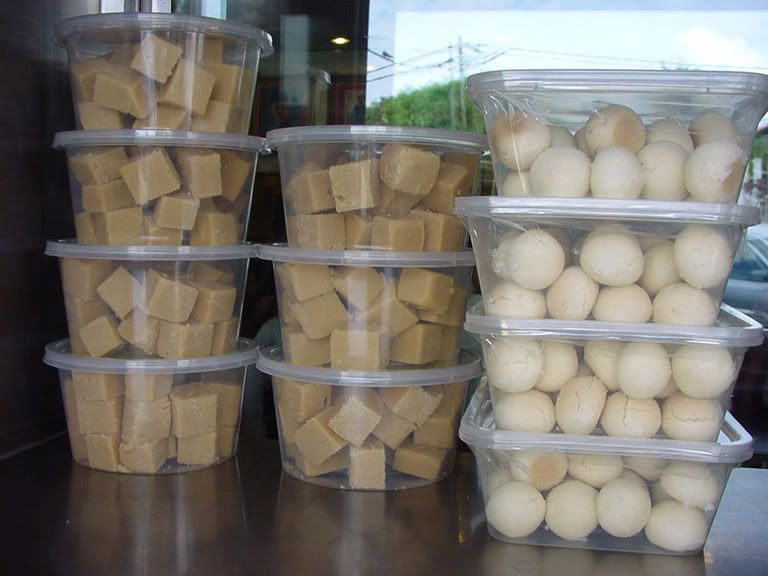
The plastic containers on the left is Khoya Barfi, a fudge like dessert made from khoya.
Khoya is usually made at home by boiling and reducing the milk to a solid state. The biscuits on the right are made of sugee or semolina flour. I usually get the Khoya Barfi, one of my favourites and surprisingly my cat, Kits loves them! Guess it's not strange since it is made from milk and cats are supposed to love milk.

Image hosted by Photobucket.com

This is Lotus' coconut candy, all pretty in pink. These candies are usually made from evaporated milk, condensed milk and freshly grated coconut. You can add different colourings and flavourings when making your own at home. Usually they make pink, green, plain vanilla or chocolate ones.

Image hosted by Photobucket.com

These are all the different kinds of Barfi they serve at Lotus. You can make them out of any ingredients including vegetables! The one below is just a plain milk one. Sometimes for festivals, they will decorate them with silver foil.

Image hosted by Photobucket.com

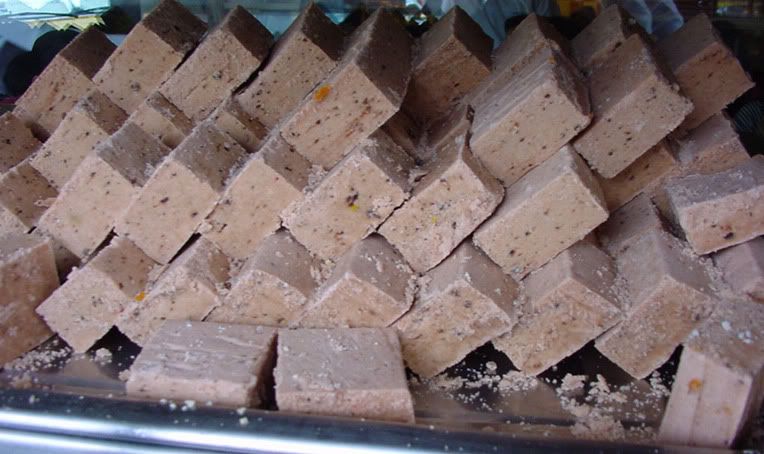
This barfi is made from cocoa powder and chocolate bits inside it.

Image hosted by Photobucket.com

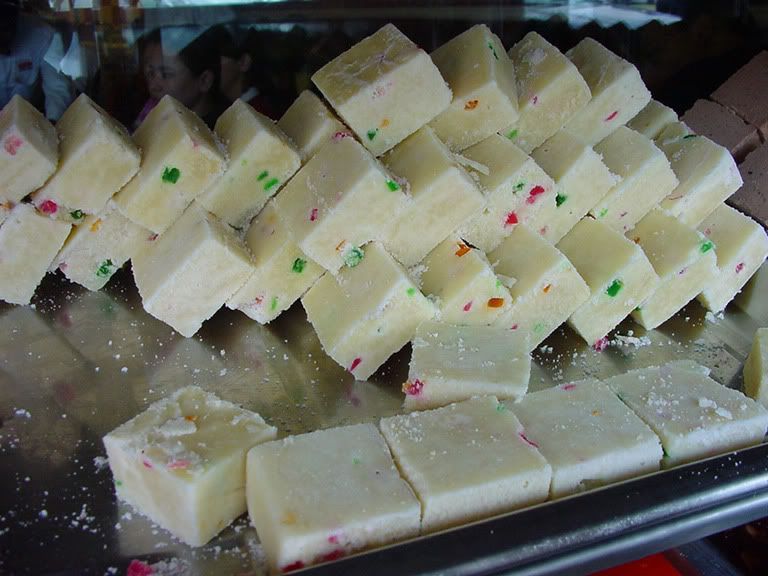
This is barfi studded with some dried fruits. Don't they look pretty with those red and green bits peeking out from that creamy fudge like dessert.

Image hosted by Photobucket.com

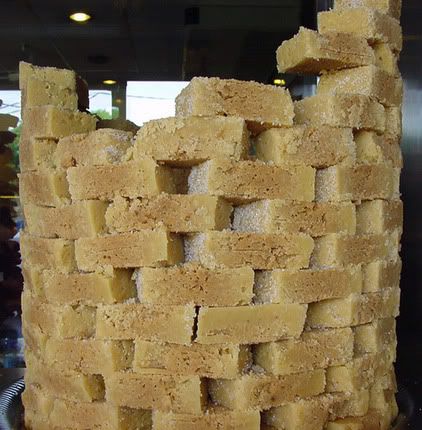
I love the way they stack up these sweets, reminds me of building Lego! This is plain barfi dusted with crunchy caster sugar.

Image hosted by Photobucket.com

I am not sure what's the Indian name for this but Lotus told me that this doughnut like sweet is made from brown sugar.

Image hosted by Photobucket.com

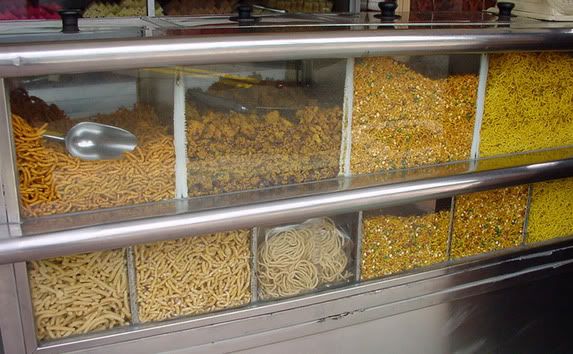
Besides sweets, Lotus also sells a variety of Muruku and crispies. Will probably blog about that another day once I get someone to explain to me the different varieties.

Image hosted by Photobucket.com

Wednesday, July 27, 2005

Savoury Sunday

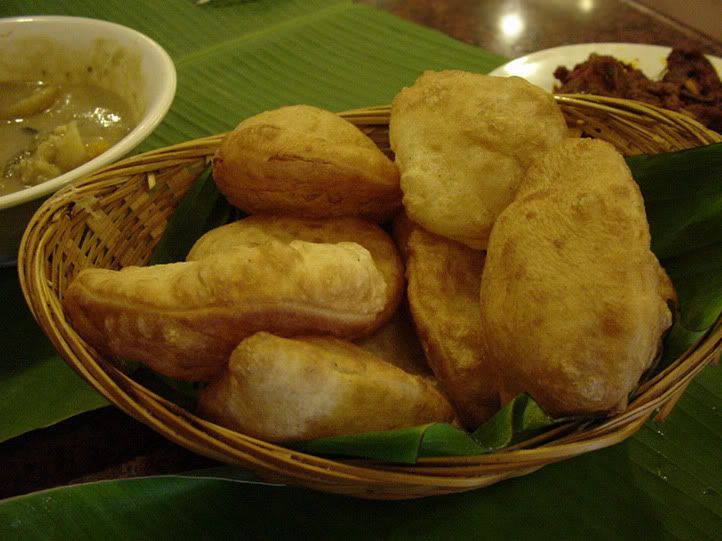
Last Sunday, we explored the savoury and sweet tastes of Indian/Punjabi food at Lotus Family Restaurant in Petaling Jaya. The Petaling Jaya suburbs especially the Old Town section is peppered with Indian restaurants serving banana leaf rice during lunch time but this is the only place we know that serves Bhatura. After searching through the Internet, I understand the Bhatura is a Punjabi snack. Essentially it is a deep fried unleavened bread made from unbleached white flour and yoghurt. If you want to make this at home, have a look at these curry addicts' website as they give detailed instructions on how to make it. There is also a step by step video.

Image hosted by Photobucket.com

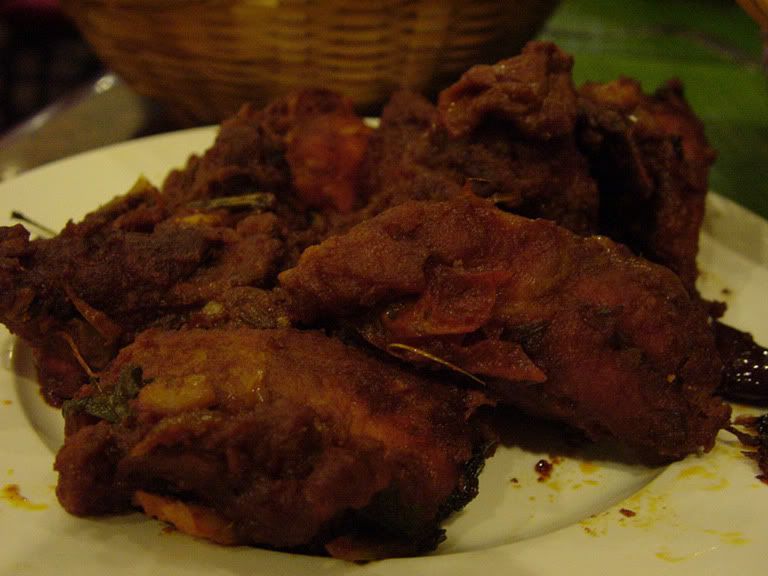
Both of us had the Bhatura with some dry chicken curry and vegetable kurma. There was so few vegetables in the kurma that it looked more like kurma sauce only. The chicken was also nothing great. Bit dry and not much flavour to it. Sorry about the slightly dark pictures as the place was quite dim.

Image hosted by Photobucket.com

Lotus Family Restaurant
Jalan Gasing
Petaling Jaya

*Disclaimer: The opinions expressed here is entirely based on my personal tastebuds and may vary for others. The reviewer also declares that she has not received any monetary or non-monetary compensation from the restaurant for writing this review.

Tuesday, July 26, 2005

Haloscan Comments Gone Haywire

I just realised that the haloscan comments is openning another pop up window from this opm.blitzed.org website which is banning some IP addresses! I suspect this must be some stupid bug that has attached itself on haloscan as I definitely did not install that. No indication on the haloscan website also about it. If any of you know how to get rid of it, please email me at boo_liciouskl@yahoo.com so I can fix the problem.

Pending all this, I have re-activated blogger's comments so please post your comments there. Thanks and hopefully I can resolve this without losing my old comments.

Colourful Hot Soup

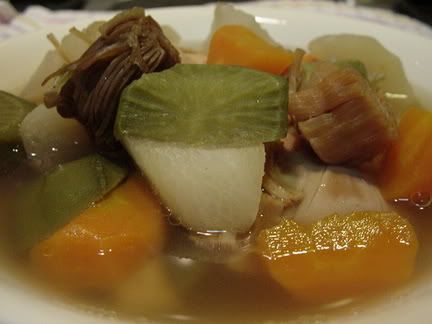
It has been raining off and on in Malaysia so I am still in the soup mode. Recently I made this new soup which is a variation of my usual white radish and chicken soup. In addition to the white radish, I added some green radish and carrots. The idea for this soup originated from my mother who drank this version in Hong Kong. Trawling through the internet, I noticed that there are various interpretations of this soup also; Kuali has a similar one except they add burdock to the mix while Kitchen Capers' soup is a mix of green radishes, carrots and herbs.

Instead of red dates, I used one honey date (Mat Chou in Chinese) to add to the soup to make it sweet. You can get it at the Chinese medicine shops and make sure you choose the ones without the additional sugar coating. Don't use too much of it or else your soup will be too sweet. The honey date is said to help clear the phelgm of someone suffering from a cold. You can see the honey date on top but it's a bit mangled after being boiled for two hours. The soup was lovely, sweet enough to just drink without any additional salt. It made a wonderful one pot meal with some white rice. I added some dried scallops to the soup but you can omit them if you don't want your soup to be too sweet.

White radish, green radish and carrot soup
1 medium size white radish
1 medium size green radish
1 medium size carrot
2 chicken legs, deskinned
2 dried scallops
1 honey date (mat chou in Chinese)
Boiling water

Cut the top and bottom bits of the white radish, green radish and carrot. Peel the outer layer of the vegetables by using a vegetable peeler. Cut them into chunks. Set aside in a large pot. Boil water and pour it over the chicken legs in another pot. This helps clean out the oil and scum from the chicken. Leave for 2 minutes and drain. Transfer the chicken legs to the large pot with the other vegetables. Add the dried scallops and the honey date. Pour enough water to cover the ingredients. Boil the soup and let it simmer for two hours.

Image hosted by Photobucket.com
Related Posts Plugin for WordPress, Blogger...